
Records Retention Guide for Small Business Owners
Know What to Keep, How Long to Keep It, and When to Safely Shred It
Introduction
Keeping the right business records for the right amount of time protects you legally, financially, and operationally. Good record retention helps you:
Stay compliant with IRS and state requirements
Prepare for audits without stress
Keep your business organized
Reduce the risk of lost or missing documentation
Disclaimer: This guide is for informational purposes only and does not constitute legal or tax advice. Retention requirements may vary by state or industry confirm specifics with your CPA or attorney.
How to Use This Guide
Use the Quick Reference Table as your main resource.
Follow the general rules of thumb, but adjust for your state and industry.
Keep both physical and digital copies whenever possible.
Store originals of critical documents in a secure, fireproof location.
Retention Basics
IRS General Guidelines:
3 years: Minimum for most tax-related documents.
6 years if you do not report income that you should report, and it is more than 25% of the gross income shown on your return.
7 years: If you file a claim for a loss from worthless securities or bad debt deduction.
Indefinitely: If you don’t file a return or file a fraudulent return.
Definitions:
Permanent – Keep forever.
7 Years – Keep for seven full tax years.
4 Years – Payroll and employment tax records.
3 Years – Short-term records with no long-term impact.
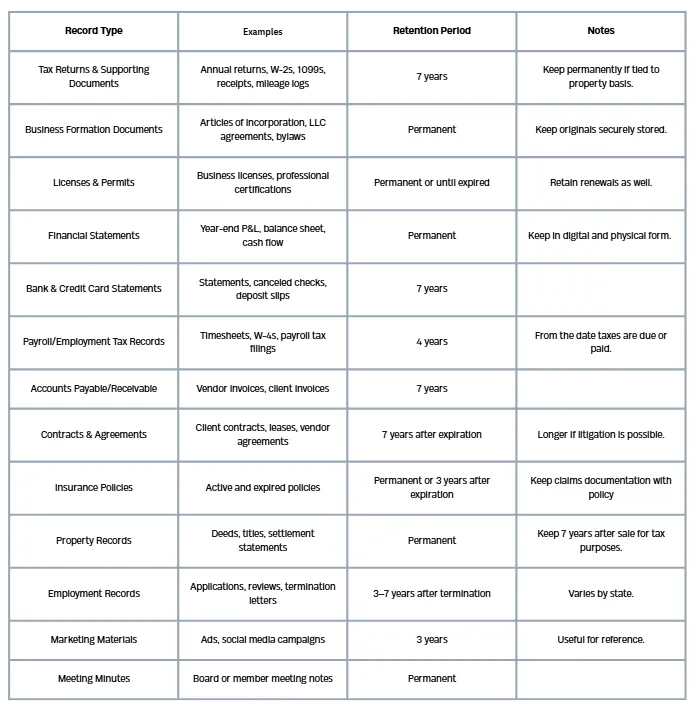
Quick Reference Retention Table
DISCLAIMER: While we strive to provide valuable guidance and support, individual results may vary and are dependent on factors such as individual effort and implementation. We are not liable for any outcomes resulting from the use of our services or products. Clients are responsible for their own actions and results.
- ©2026 All Rights Reserved .
Terms :Conditions- Privacy